

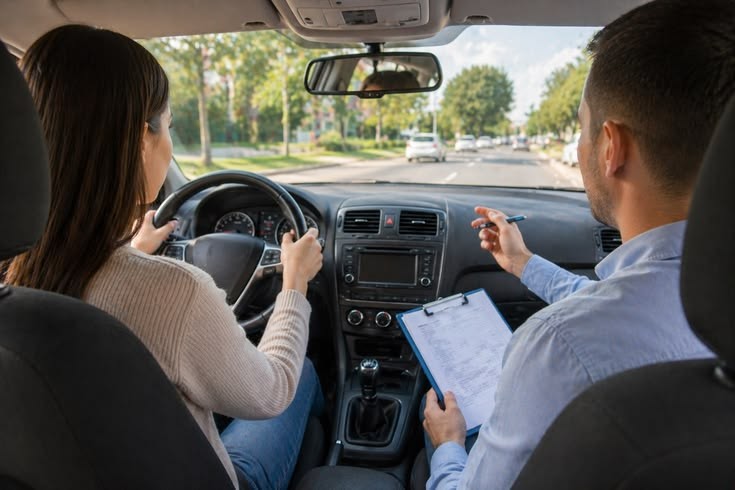
Studying driving rules and actually sitting behind the wheel can feel like two completely different experiences. On a screen, there is time to read a situation and think about the answer. On the road, signs, traffic, pedestrians, and vehicle controls all demand attention at once.
That gap is normal for beginners. An online permit course texas learners use can help build knowledge, but practical experience is where many of those ideas begin to make sense. The transition becomes easier when students expect a learning curve rather than assuming they should immediately know how to handle every situation.
Notice Road Rules Before You Start Driving
A learner does not need to wait until the first practical lesson to start connecting course material with the real world.
While riding as a passenger, look at the road rather than spending the whole trip on a phone. Notice where drivers begin slowing for an intersection. Watch how lanes are marked and pay attention to signs that appear before a turn or change in road conditions.
Seeing familiar concepts outside the course can make them easier to recognize later from the driver’s seat.
Expect the Car to Feel Unfamiliar
Knowing what a brake pedal does is not the same as knowing how much pressure it needs. Steering can also feel more sensitive or less sensitive than a beginner expects.
The first practical sessions are partly about developing that physical familiarity.
A learner may brake too firmly or turn the steering wheel more than necessary. These are not unusual failures. Small corrections and repetition help students understand how the vehicle responds, which eventually leaves more attention available for the road itself.
Don’t Try to Remember Everything at Once
Beginners sometimes become overwhelmed because they mentally run through a long checklist while driving: mirrors, speed, steering, signs, signals, traffic, lane position.
Trying to consciously manage everything at the same moment is tiring.
Early lessons can build these habits in layers. Once basic vehicle control becomes more familiar, observation receives more attention. As observation improves, the learner can work on making decisions earlier.
There is no need to force the entire process into the first few sessions.
Ask About Situations Feel Different in Real Life
A written example may seem obvious until a learner encounters something similar on the road. Traffic may be heavier, the intersection may look different, or another driver may behave unexpectedly.
This is a good time to ask questions.
Working with a driving school richmond tx can give learners a chance to discuss situations while the experience is still fresh. Instead of simply remembering that something felt confusing, they can understand what they should look for next time.
Permit to Try Again
Some skills rarely look polished on the first attempt. Parking is an obvious example, but the same can be true of turns, lane positioning, or smooth stops.
If a maneuver goes poorly during practice, reset when it is safe and try it again. The second attempt is often more useful because the learner now knows what felt wrong the first time.
Progress can be surprisingly small from one attempt to another. A slightly smoother stop or better starting position still counts.
Start Bringing the Two Parts Together
As practical experience grows, course material should stop feeling separate from driving.
A road sign covered during online study becomes something the learner responds to naturally. A discussion about following distance starts to make more sense when traffic slows unexpectedly. Rules about observation become habits rather than facts to memorize.
That connection is important. Driver education provides knowledge, while practical experience gives that knowledge context.
Conclusion
The move from online study to practical driving can feel awkward at first, and that is not a sign that the earlier learning was wasted. Some ideas only become clear once a learner sees them unfold on an actual road. Paying attention as a passenger, asking questions, and repeating unfamiliar tasks can help close that gap. Those ready to explore practical instruction after online study can visit myfirstdrive.net for details about available driver education and training services.